
Awadhi Lucknowi Interior Design Ideas
Awadhi style reflects the courtly culture of the Nawabs of Awadh, centred on Lucknow in the 18th and 19th centuries. Its architecture mixed Mughal, Persian and later European influences, with fluted pilasters, multi-foil arches and delicate stucco relief. Interiors favour pale almond and ivory walls, fine marble, low divans and the white-on-white delicacy of chikankari embroidery. The mood is gentle and graceful rather than loud, which suits modern homes looking for heritage without heavy colour.
Free to join · 3 credits to start · No card
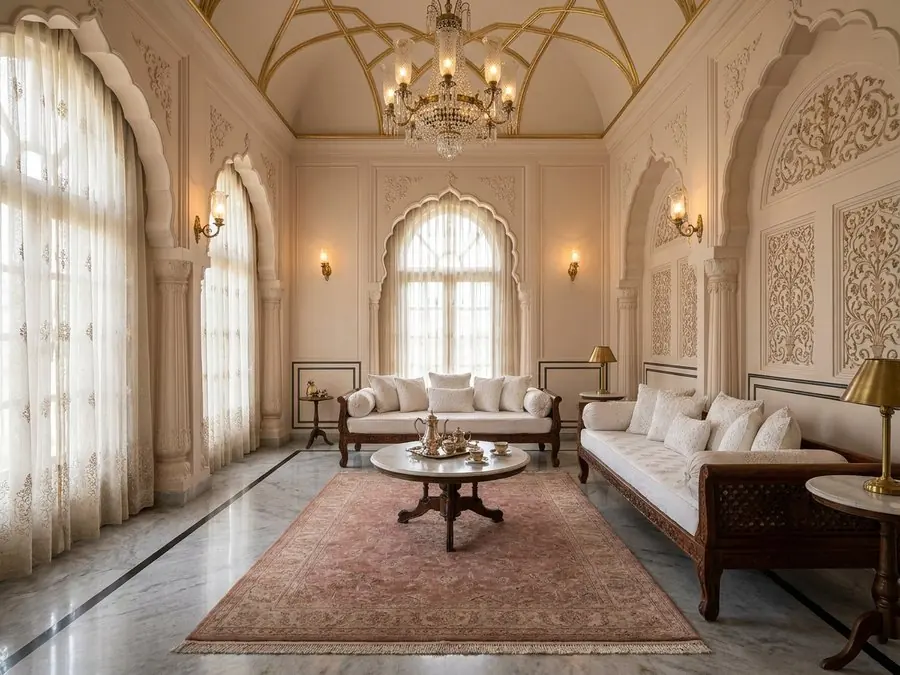
What defines it
- Ivory stucco walls with fine floral relief
- Multi-foil arches and fluted pilasters
- Chikankari-embroidered cushions and curtains
- Low carved divans with bolsters
- Grey-white marble floors with dark borders
Colours
ivory · almond · pale gold · dove grey
Works best in
living room · bedroom · dining room
For Indian homes
Chikankari is fine cotton or muslin, so use it for sheer curtains and cushion covers that can be washed often rather than on upholstery that takes daily wear.
How it works
- 1Take one photo of your room — any phone, any light.
- 2Pick a style, a colour or a look. Change only what you ask for.
- 3See the finished room in about 30 seconds, then try another.
Questions people ask
What is the difference between Awadhi and Mughal interiors?
Awadhi grew from Mughal roots but became softer and more decorative, with stucco relief, fluted pilasters and European touches. Mughal interiors lean on white marble and stone inlay; Awadhi favours pale plaster, delicate textiles and soft gold.
How do I add Lucknowi touches to a modern room?
Use chikankari curtains or cushions, an arched mirror or niche, a low divan and pale almond or ivory walls. A slim gold border or a marble-topped side table completes the look without overdoing it.
Try it on your own room
See it on a photo of your own room before you spend anything.
More in this mood
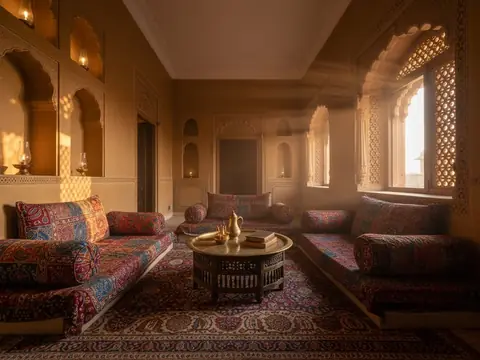 North Indian RoyalRich Rajasthani-inspired opulence: jharokhas, deep colours and gold.
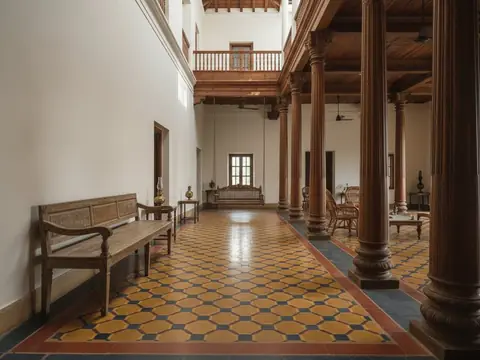 Chettinad HeritageAthangudi tiles, carved teak pillars and antique brass — Chettinad mansion grandeur.
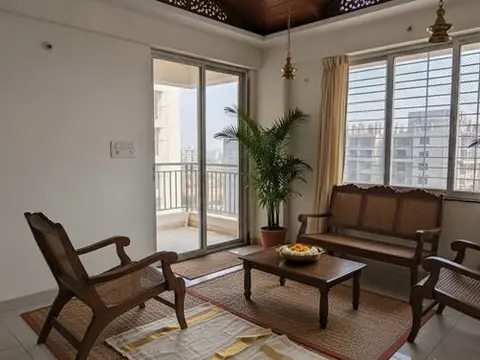 Kerala NalukettuAncestral tharavad charm: dark polished teak, oxide floors and brass urulis.
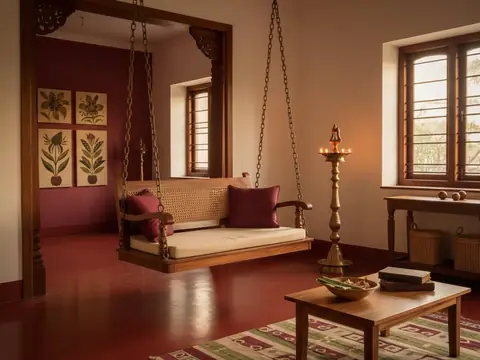 South Indian TraditionalRosewood, brass lamps and warm earthy tones — classic South Indian warmth.
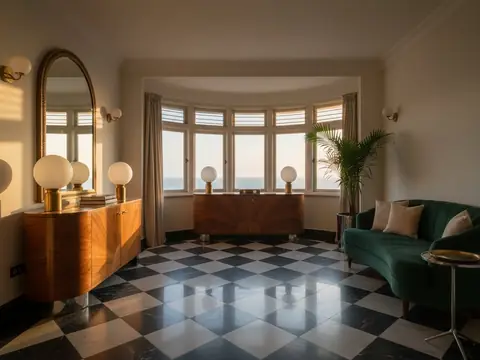 Art Deco BombayMarine Drive glamour: curved wood, geometric patterns and jazz-age brass.
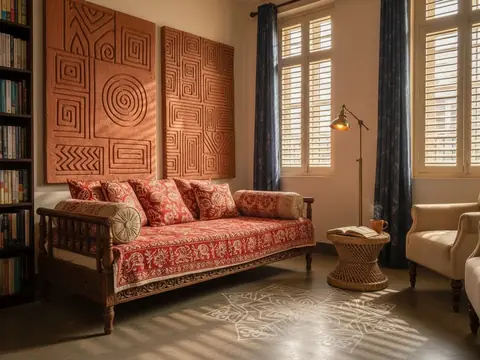 Bengal ArtisanKantha textiles, terracotta craft and intellectual old-Kolkata warmth.
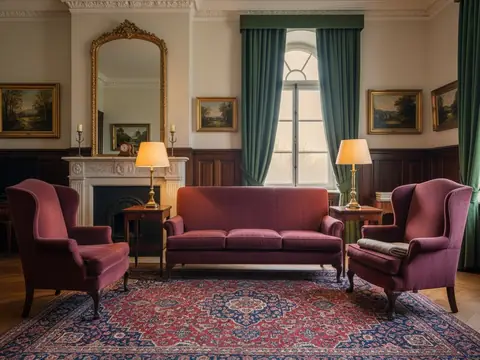 Traditional18th–19th-century Europe: carved dark wood, silk, velvet, brass, symmetry and moulding.
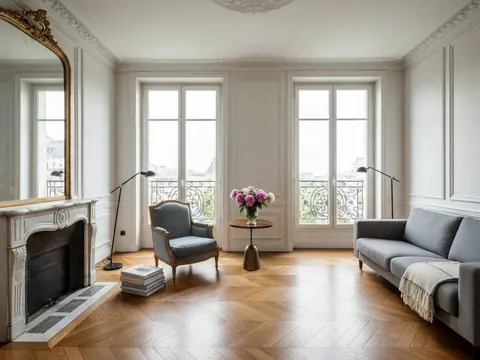 Parisian ChicHaussmann apartment: herringbone floor, tall mouldings, gilt mirror, modern pieces.